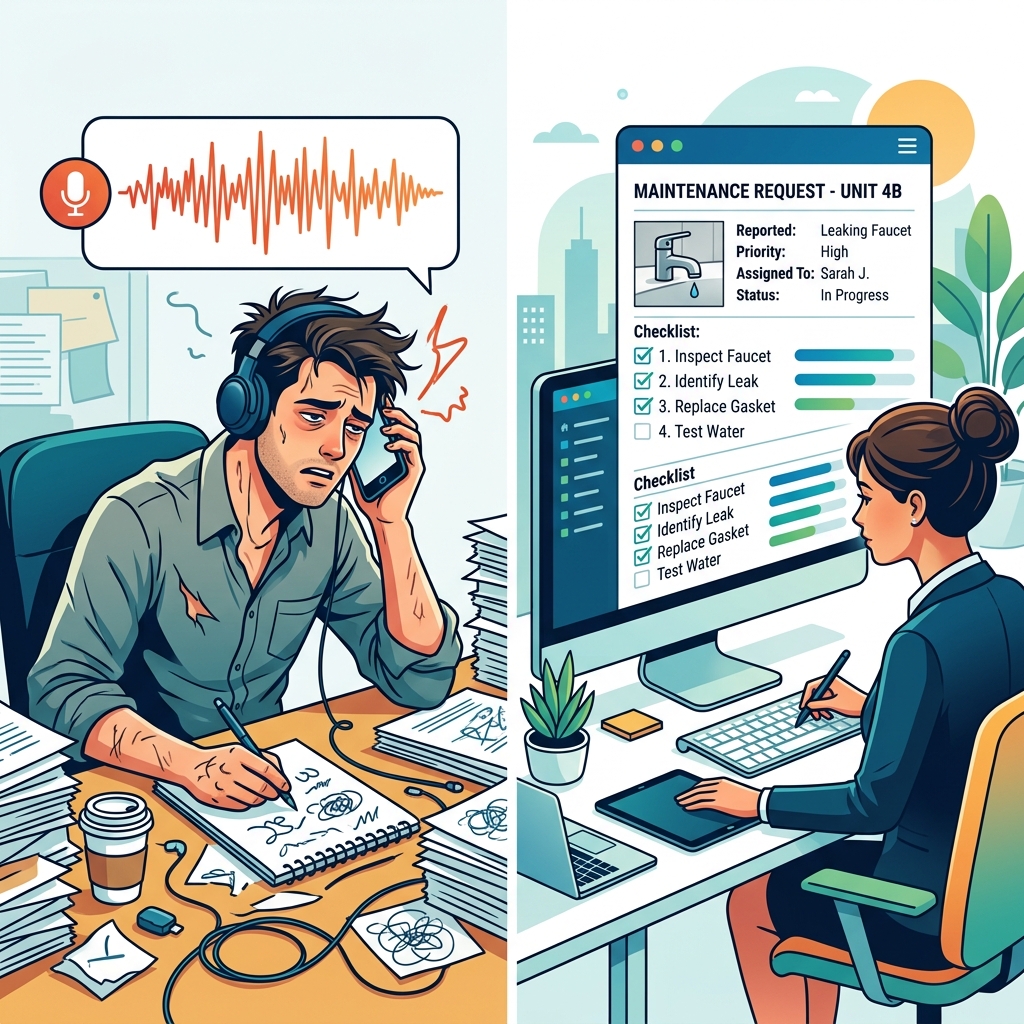
On Monday at 09:15, Carlos sat down at his desk with a cup of coffee and opened WhatsApp. The first message from a tenant was a 2-minute and 43-second audio recording made on a windy street. Carlos put on his headphones, listened through two minutes of rambling complaints about neighbours and street noise, only to discover in the final ten seconds that the hot water boiler in apartment 3B was leaking. Carlos spent six minutes replaying the audio, taking notes on a scrap of paper, and realizing he still had no photo, no boiler brand, and no idea when the leak started.
The asymmetric burden of audio messages
Voice notes have quietly become the single biggest productivity killer in rental property management. The reason is simple: audio messaging is an asymmetric transaction. For the sender, recording a voice note requires zero effort, zero structure, and zero editing. For the property manager on the receiving end, processing that audio requires uninterrupted attention, manual transcription, and substantial cognitive effort.
Every managing agent knows that reading a concise text takes four seconds, while listening to an audio message takes two minutes. Yet many agencies continue to let tenants use voice messaging unchecked, forcing administrative staff to act as human transcribers rather than property professionals.
The operational black hole
Beyond the immediate time loss, voice notes create a structural blind spot in agency operations. Audio files cannot be indexed, searched, or sorted in a database. If an agent needs to confirm whether a tenant reported damp three months ago, they cannot type a keyword into a search bar; they must manually review dozens of unlabelled audio clips across multiple chat threads.
Furthermore, contractors refuse to listen to tenant audio recordings. A plumber dispatched to a repair job does not want an emotional voice memo about how cold the shower felt; they need three concrete facts: the address, the appliance model, and a clear photograph of the valve. The agency is forced to bridge this gap manually, converting vague audio monologues into actionable work orders.
| The Voice Note Intake | Structured Digital Triage |
|---|---|
| 2 to 3 minutes of listening time per incident. | Instant structured summary generated in seconds. |
| Zero searchability; impossible to track past records. | Fully searchable archive with exact timestamps. |
| Missing essential photos and appliance model data. | Mandatory photo and categorisation required upfront. |
| Agent manually transcribes notes for contractors. | Clean, professional work orders dispatched immediately. |
Why high-performing agencies eliminate audio intake
The forward-thinking segment of the property sector has already drawn a clear line: maintenance reporting is an operational process, not a podcast. These agencies have replaced open-ended voice messaging with guided interactive workflows.
All of us know that dealing with maintenance via informal voice notes can drain two hours of an agent's morning, whereas agencies using structured intake convert those same issues into clean, categorised tickets in under thirty seconds. When tenants are guided through specific prompts (category, urgency level, photo upload), the ambiguity disappears. The tenant receives a faster resolution, the contractor gets accurate technical specifications, and the agency reclaims hours of productive time every week.
Final reflection
Allowing tenants to report complex maintenance issues via rambling voice notes is an invisible tax on your team's sanity and your agency's margins. Affordable solutions like TenantDesk replace chaotic voice messages with structured AI intake via WhatsApp and Telegram, ensuring every report arrives with photos, appliance details, and urgency ratings already sorted. To protect your agency's operational efficiency, you must stop listening to audio complaints and start demanding structured data.