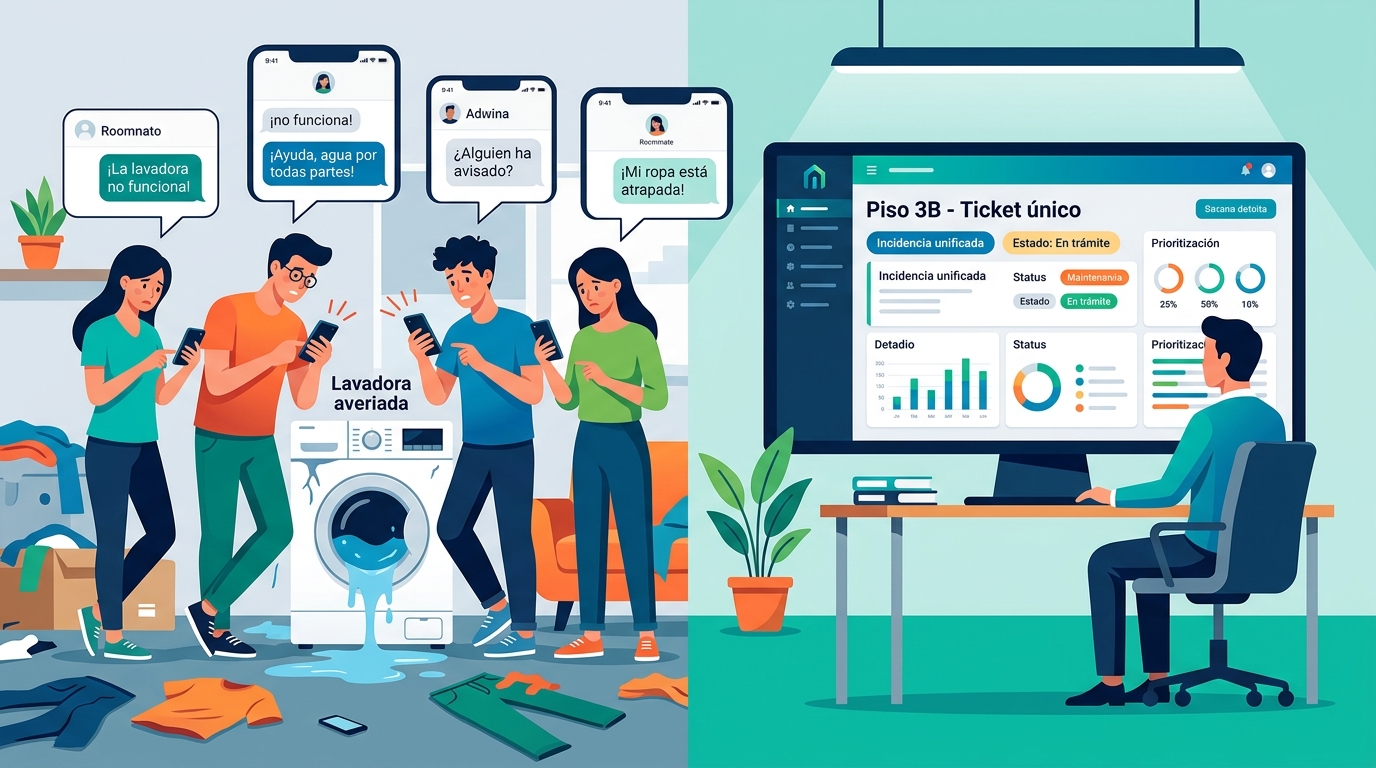
In a four-bedroom shared apartment in Madrid, the communal washing machine broke down on Tuesday morning. By 11:00, the managing agency had received four separate, uncoordinated WhatsApp messages from all four roommates. Tenant A texted that the motor was making a burning smell; Tenant B reported that the door lock was jammed; Tenant C sent a panicked voice note about soaked clothes; and Tenant D demanded an immediate rent discount if it was not fixed by the afternoon. The agency spent forty minutes juggling four distinct conversations regarding the exact same appliance. When the technician arrived at 16:00, nobody was home because every roommate assumed someone else was waiting inside.
The multiplier effect of multi-tenant leases
The explosive rise of co-living, room-by-room rentals, and student flat-shares has created an attractive yield for property investors, but an operational nightmare for property managers. When an agency signs a lease for a standard family home, there is one primary contact point and one clear line of accountability. In a shared flat with four independent occupants, the agency is effectively managing four separate clients under one roof.
Every managing agent knows that dealing with shared apartments through individual chat threads causes severe duplicate work and contradictory information, whereas agencies that anchor communication to the property unit eliminate fragmented conversations entirely. When communication is uncentralized, each tenant reports their own subjective version of an issue, creating administrative confusion and wasted contractor call-outs.
The bystander effect in property maintenance
Shared flats suffer from a classic psychological problem: the bystander effect. Because nobody owns the communal space, nobody takes personal responsibility for coordinating repairs. When a kitchen tap drips, tenants either ignore it for weeks assuming a housemate will report it, or all four report it simultaneously when the situation finally boils over.
Furthermore, scheduling contractor access in a co-living property without a unified system is nearly impossible. When an agent coordinates an appointment with one roommate via direct message, the other three occupants remain completely unaware. Technicians frequently arrive to locked doors or confront angry housemates who were never informed that a plumber would be entering their shared bathroom.
| Fragmented Roommate Chats | Unit-Centric Digital Intake |
|---|---|
| 4 separate text threads for 1 broken washer. | All reports unified into 1 property ticket (Apt 3B). |
| Conflicting descriptions and missing appliance data. | Single diagnostic photo and serial number collected. |
| Technician arrives; nobody is home (wasted fee). | Access permissions confirmed and logged in advance. |
| Agent wastes 45 minutes answering duplicates. | Unified status updates visible to all occupants. |
How top agencies handle shared properties
Progressive property management firms do not manage tenants; they manage property units. They have eliminated informal personal texting and replaced it with property-anchored digital intake funnels.
All of us know that replying to multiple housemates across private WhatsApp chats consumes valuable hours of an agent's morning, while modern agencies deploy automated intake tools where maintenance requests are tied directly to the apartment address. When any roommate opens a report, the system categorises the issue, collects photographic evidence, and establishes a single source of truth for the entire household. Duplicate claims are consolidated automatically, and contractor appointments are scheduled with explicit access rules.
Final reflection
Scaling a portfolio of high-yield co-living properties should not require your team to act as round-the-clock dispute mediators between roommates. Tools like TenantDesk automate maintenance intake via WhatsApp and Telegram, structuring incoming reports by property unit and collecting photos and appliance details from the very first message. By replacing chaotic, multi-person chat threads with clear digital triage, you protect your agency's time and turn shared-flat maintenance into an organized, profitable operation.