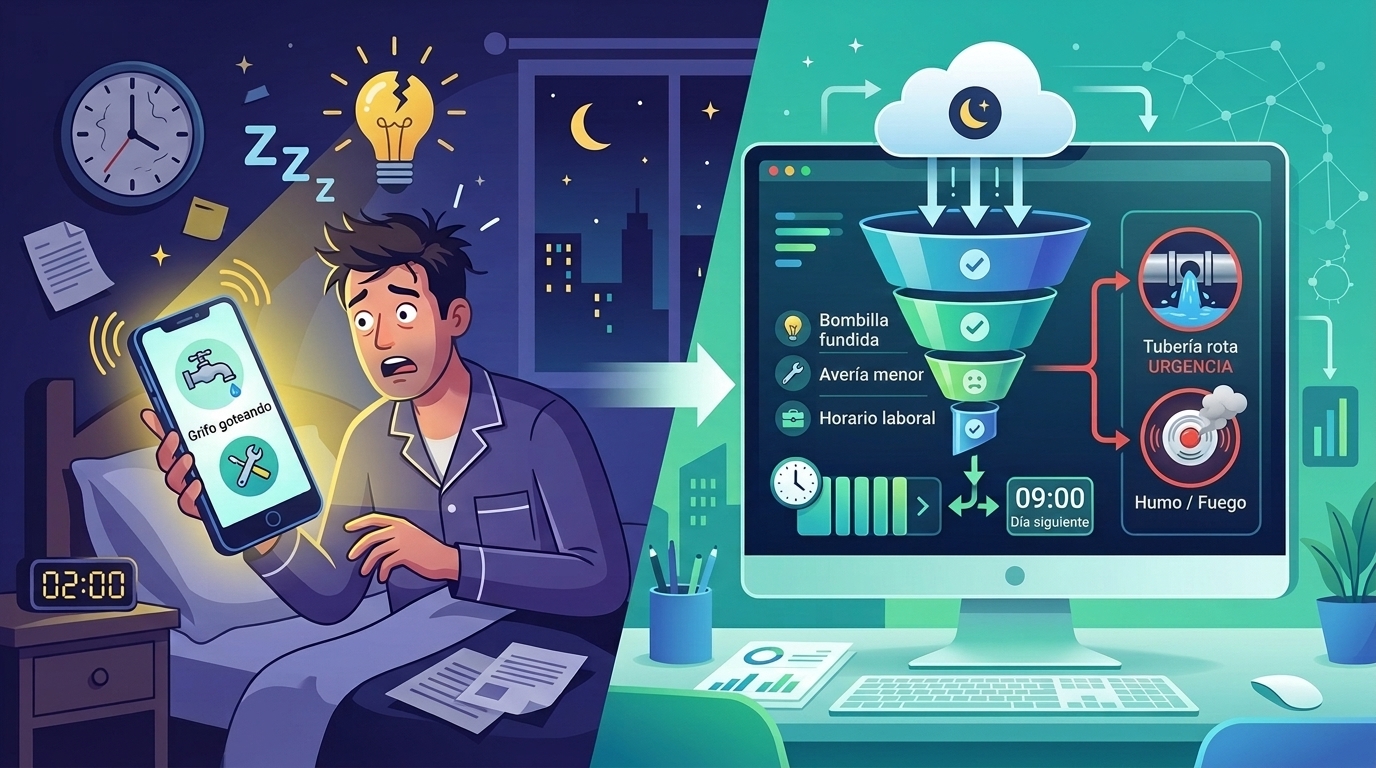
At 02:15 on a Sunday morning, Javier, who manages 75 apartments in Valencia, was jolted awake by a phone call from the outsourced 24/7 answering service he pays €350 each month to retain. The operator sounded urgent: "We have an emergency dispatch from apartment 4C; the tenant reports the master bathroom is completely flooded." Half-asleep and terrified of structural water damage, Javier immediately dispatched his emergency on-call plumber, who charged a mandatory €220 night call-out surcharge. The plumber arrived thirty minutes later only to discover that the toilet flush button was slightly stuck, causing a trickle of water down the internal bowl. Javier paid €220 for a five-second button jiggle.
The illusion of third-party coverage
Boutique property agencies managing between 30 and 150 properties operate in an awkward operational zone. They are too large for the agency owner to monitor a personal phone all night without burning out, yet too small to justify an in-house night team. The standard industry response is to hire a third-party call answering service. On paper, it sounds like complete peace of mind; in practice, it is often an expensive escalation pipeline.
Every managing agent knows that outsourced call center operators are trained in customer etiquette, not technical triage. To protect themselves from liability, third-party operators treat almost every emotional tenant claim as an emergency, passing the panic directly down to the property manager. Paying hundreds of euros a month just to be woken up anyway is a deeply frustrating waste of resources.
The golden rule of triage: fire, flood, or blood
In property management, a true middle-of-the-night emergency is strictly defined by immediate physical danger or irreversible structural destruction: severe water torrents that cannot be isolated at the stopcock, electrical sparking, or gas leaks. A dripping kitchen tap, a blown hallway bulb, or a noisy refrigerator are inconveniences, not midnight emergencies.
However, when a stressed tenant calls a telephone operator at midnight, verbal exaggeration takes over. Without visual diagnostic tools, a call center operator cannot verify whether "flooding" means standing water across parquet flooring or simply a wet bathmat. Because traditional telephone lines cannot capture photographs or guide users through shut-off valves, the agency is forced to assume the worst and dispatch costly emergency technicians blindly.
| Generic Call Center (€350/month) | Structured Digital Intake |
|---|---|
| Operator accepts subjective verbal panic. | Bot demands photo/video proof and fault selection. |
| Wakes the manager for minor toilet flushes. | Provides instant isolation guidance; queues ticket for 09:00. |
| Dispatches emergency contractors at 3x rates. | Only alerts emergency personnel for verified catastrophic leaks. |
| Zero data logging; vague verbal summaries. | Clean, timestamped digital report with media evidence. |
Why modern agencies digitise nighttime intake
High-performing property managers have realized that phone calls are the worst possible medium for nighttime triage. These agencies have replaced generic call centers with automated, rule-based digital workflows.
All of us know that telephone answering services often cost thousands of euros a year while failing to filter out simple maintenance quirks, while forward-thinking agencies use automated triage to guide tenants through self-help steps (like resetting a circuit breaker or turning an isolation valve) in real time. If the issue is routine, the system logs the photos and confirms to the tenant that an agent will contact them at 09:00. If the system detects a genuine emergency, it alerts on-call staff with photos, exact addresses, and shut-off status already documented.
Final reflection
Protecting your team's sleep and your landlords' budgets requires a strict, unyielding diagnostic filter, not a polite telephone receptionist who passes along panic. Tools like TenantDesk automate nighttime incident intake via WhatsApp and Telegram, enforcing visual evidence and precise categorization before any emergency alert is triggered. By replacing expensive, blind answering services with intelligent triage, you eliminate false midnight emergencies and ensure your team wakes up rested and ready to manage.