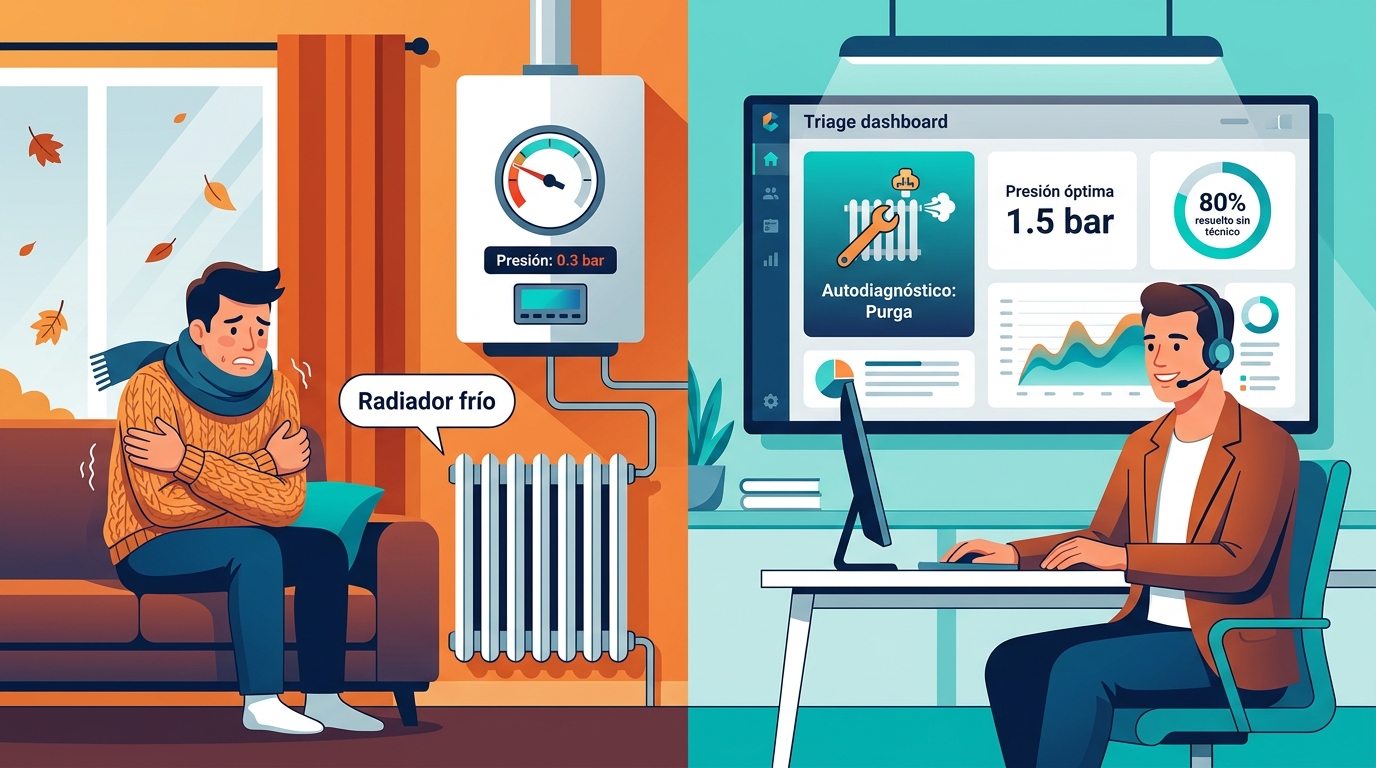
In mid-October, the first sharp cold front of the season swept across the city. At 08:30 on Monday, Miguel, who manages 80 apartments, unlocked his office door to find thirty-two unread WhatsApp messages and four urgent voicemails. Every single tenant was reporting the exact same disaster: "The heating is completely broken, send a technician immediately." Panicked by the sheer volume of complaints and terrified of angry landlords, Miguel spent his entire morning frantically dispatching heating engineers at emergency autumn rates of €140 per visit. By Wednesday, nearly half of those dispatched calls turned out to be boilers with low water pressure (0.4 bar) that needed a thirty-second turn of an intake valve, or radiators that simply had trapped air. Miguel's landlords were billed over €1,800 for problems that could have been resolved with a five-cent coin and a brief instructional video.
The predictable seasonal bottleneck
The arrival of autumn brings a ritual that every rental agency dreads: the simultaneous ignition of dormant heating systems. After six months of summer inactivity, domestic boilers and central radiators naturally lose pressure or accumulate air pockets. The heating system is rarely broken; it is simply dormant. However, to a shivering tenant waking up in an unheated flat on a Monday morning, a dormant boiler feels like a structural catastrophe.
Every managing agent knows that the first autumn cold front routinely paralyzes agency phone lines with dozens of identical complaints, while forward-thinking agencies deploy automated seasonal triage that guides tenants through pressure valve checks before a technician is ever booked. Treating routine seasonal start-up friction as an emergency dispatch crisis is a recipe for operational exhaustion and wasted owner capital.
The economic drain of the low-pressure call-out
Heating engineers love the first two weeks of autumn because it represents the easiest money of the year. Charging a full diagnostic and call-out fee to turn a black plastic knob beneath a combi-boiler takes three minutes of work and generates zero long-term value for the property. For a boutique agency, this creates a severe financial drain.
When an agency accepts verbal complaints without visual verification, they have no way of knowing whether a boiler is displaying a fatal error code or if the needle on the pressure gauge is simply resting below 1.0 bar. Landlords are left to foot the bill for basic household maintenance, breeding resentment against the management agency for failing to protect their profit margins.
| Reactive Seasonal Chaos | Automated Autumn Triage |
|---|---|
| 30+ panicked texts handled manually on Monday morning. | Interactive chatbot filters issues by appliance category. |
| Heating engineers dispatched blindly at €140 per visit. | Mandatory photo of the pressure gauge requested upfront. |
| Technicians paid to bleed radiators with a coin. | Automated 20-second self-help guide sent to the tenant. |
| Angry owners receiving duplicate call-out invoices. | 80% of pressure drops resolved without sending a contractor. |
How high-performing agencies survive the cold surge
Forward-thinking property managers do not treat autumn as an unexpected emergency; they treat it as a predictable data workflow. They have automated the initial diagnostic barrier to separate dormant appliances from genuine mechanical failures.
All of us know that spending an entire morning repeating the words "check the pressure gauge under the boiler" to twenty different renters is an absurd waste of administrative talent, while modern agencies use digital triage tools that automatically trigger specific diagnostic steps whenever a tenant selects "Radiator" or "Boiler" in autumn. The system requests an immediate photograph of the boiler display and provides instant visual instructions on how to repressurise the loop. If the pressure rises to 1.5 bar, the ticket closes automatically. Only genuinely broken heating systems reach an agent's desk.
Final reflection
Surviving the autumn heating surge does not require hiring temporary call-center staff or burning through your landlords' maintenance reserve funds. Tools like TenantDesk automate maintenance intake via WhatsApp and Telegram, deploying smart diagnostic prompts and requiring photo evidence before any work order is created. By replacing blind panic with automated seasonal triage, you keep your agency calm, protect your landlords' margins, and resolve tenant heating issues in minutes rather than days.