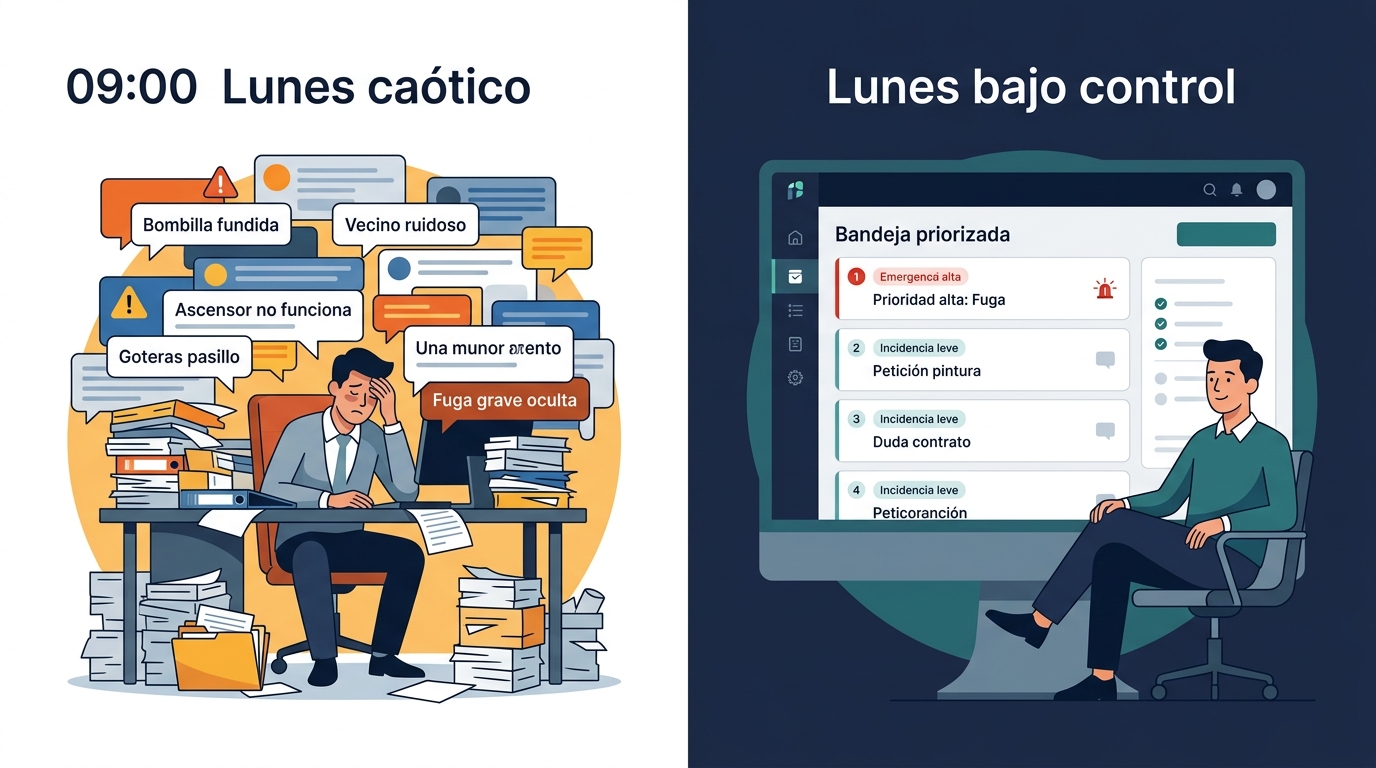
On Monday at 08:45, Marcos, managing 90 rental units in Bilbao, sat at his desk with a cup of coffee and unlocked his agency phone. Over the weekend, twenty-nine unread WhatsApp conversations had accumulated. Because consumer messaging apps sort chats purely chronologically by the timestamp of the last message sent, the conversation sitting right at the very top was from a tenant at 08:30 complaining about a squeaky bedroom door hinge. Below that was a message about a blown hallway bulb, followed by a polite request for a rent invoice copy. Marcos spent the next eighty minutes reading messages, replying politely, and clearing notifications. It was not until 10:15, when he scrolled down to the twenty-fourth conversation sent on Saturday afternoon, that his stomach dropped: apartment 2C had a ruptured pipe beneath the sink that had been seeping into the lower neighbor's ceiling for thirty-six hours. By the time Marcos called an emergency plumber, a routine €120 repair had escalated into a €2,400 insurance disaster of waterlogged cabinetry and warped parquet.
The chronological trap of consumer chat
The standard way small and mid-sized rental agencies handle weekend communications is to let incoming texts pile up in a shared WhatsApp account until Monday morning. While this appears to set healthy weekend boundaries on the surface, it creates an operational blind spot. Consumer chat apps are designed for social chatter, not triage: they treat an impatient tenant demanding a lightbulb change with the exact same visual urgency as an active pipe burst.
Every managing agent knows that starting Monday by manually sifting through thirty unorganized weekend messages paralyzes an agency's morning, while forward-thinking agencies use automated triage that surfaces catastrophic hazards at the top of the queue before 09:00. When an inbox is completely flat, urgency is dictated by whoever sent the most recent message, forcing property managers to spend their highest-energy morning hours acting as manual message sorters rather than resolving property risks.
The cognitive drain of manual message sorting
Sorting through thirty unstructured weekend messages requires immense cognitive effort. The manager must read through emotional rants, decipher vague descriptions, verify tenant addresses, and build an internal mental ranking of what needs immediate dispatch versus what can wait until Thursday.
By the time the agent finishes reading the queue at 10:30, decision fatigue has set in. Meanwhile, the contractors who had morning availability are already booked on other jobs, and the tenants with legitimate emergencies have grown furious after waiting forty-eight hours without a structured response. The agency spends the rest of Monday putting out fires instead of running a proactive business.
| Flat Chronological WhatsApp Wall | Automated Severity Triage Queue |
|---|---|
| Chats sorted by time of last incoming message. | Tickets sorted automatically by risk and urgency. |
| Critical leaks buried beneath squeaky door hinges. | Floods and electrical hazards flagged at the very top. |
| Agent loses 90 minutes reading raw text on Monday. | Agent reviews pre-categorized tickets in 10 minutes. |
| Contractor morning dispatch slots missed. | Emergency trades booked first thing at 09:00. |
How high-performing agencies start their week
The leading edge of property management has eliminated the Monday morning scramble. They do not allow raw, unstructured messages to sit in an unranked queue over the weekend.
All of us know that spending two hours reading messages just to decide what to do first is an absurd operational leak, while agencies with automated intake separate routine requests from genuine hazards automatically. Over the weekend, the system accepts reports, collects necessary diagnostic photos, and applies instant priority tags. When staff log in on Monday morning, the queue is already organized: high-risk water and electrical cases sit at the top with photos attached, while non-urgent inquiries are grouped below. The team can dispatch urgent contractors within fifteen minutes and handle routine maintenance calmly throughout the week.
Final reflection
Your agency's week should not be dictated by whichever tenant happened to text you last. Tools like TenantDesk automate weekend maintenance intake via WhatsApp and Telegram, using multi-language hazard detection to flag severe risks and categorizing incoming requests before routing them cleanly to Chatwoot. By replacing a chaotic, flat chat wall with an automated priority queue, you protect your properties from compounding damage and give your team the clarity to start every week in control.