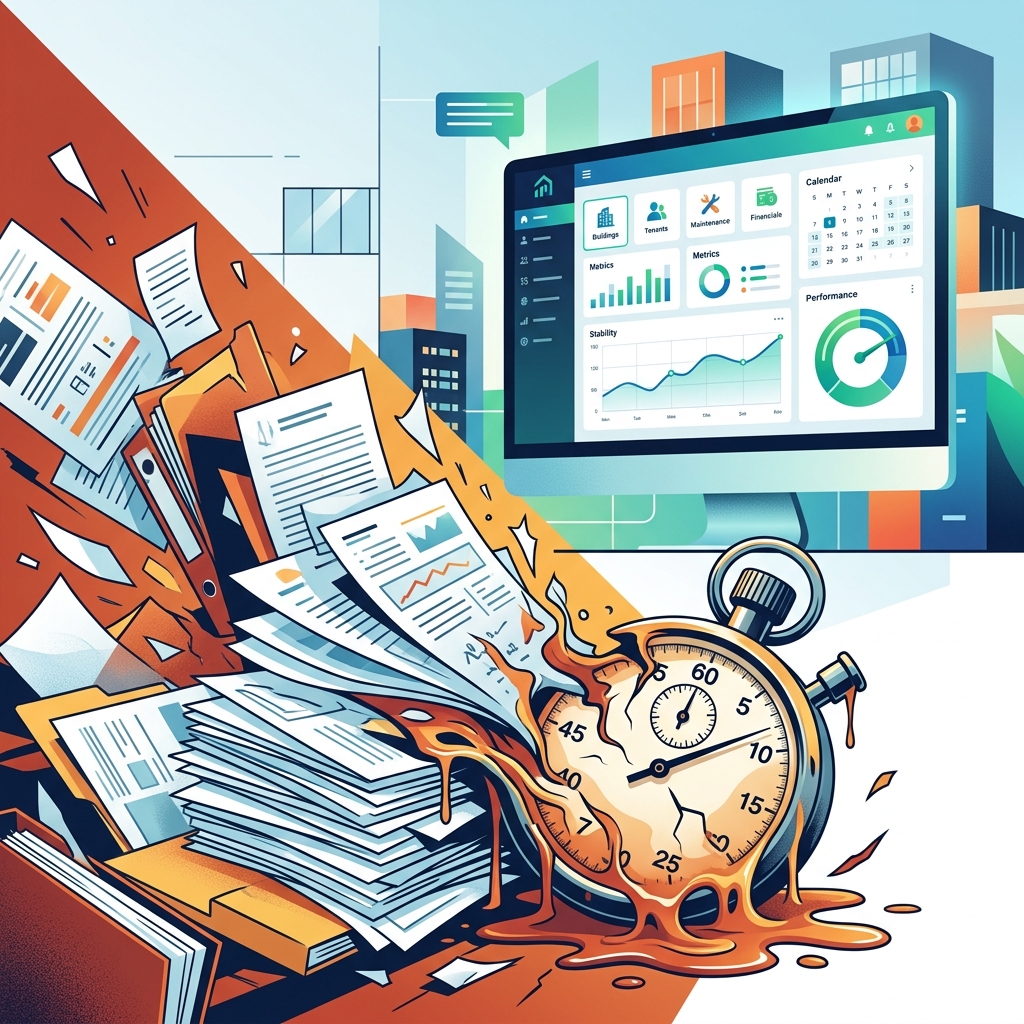
Most property managers believe that the key to premium service is replying to a tenant's WhatsApp within three seconds, even on a Sunday lunchtime. The reality is that confusing a quick response with effective resolution is the most expensive mistake a growing agency can make.
The trap of immediacy in maintenance
Managing property incidents has become a stressful race against the clock. From a jammed blind to a water leak, response times seem to dictate an agency's reputation. We all know that trying to diagnose a burst pipe over the phone at eleven o'clock at night is like playing Russian roulette, but with water damage. Conversely, leading agencies know that true speed isn't replying instantly with "I'll look into it," but rather structuring the incident digitally so the plumber has the address, contact details, and a clear photo first thing the next morning.
The sector has been crashing into the same wall for years. Why are we still managing stress as if it were 2005? Relying on outdated methods, such as crossed emails and emergency calls, not only devours billable hours but also multiplies the risk of human error.
The illusion of data and false control
Our daily conversations with property managers reveal a clear pattern: many tenants suffer huge delays not because the agency is slow to reply, but because the information arrives fragmented. A "the boiler is broken" message without specifying the model or the exact apartment completely paralyzes the process. The reality is that the time wasted chasing tenants to send a simple video is the difference between a loyal client and a bad public review.
Although digitalization promises a solution, adoption remains frustratingly slow. It is easy to blame a lack of budget, but resistance to cultural change carries much more weight. Are we trapped in a cycle of organizational inertia?
- Measure how many times your team has to re-contact a tenant to ask for a photo of the fault.
- Eliminate the habit of giving an immediate "ok, we're on it" without collecting structured data first.
- Implement a tool that forces the tenant to detail the problem before it reaches your team.
- Set metrics for actual problem resolution, not just first response time.
What the most efficient agencies do differently
Agencies that dominate their market have stopped competing on manual response speeds. They have adopted platforms that take on the role of the first filter. Instead of relying on chaotic phone calls, they digitize the first contact, managing to collect all key information in minutes without a single phone ringing in the office.
By having structured data, these agencies can diagnose and predict the severity of the problem before waking up an emergency technician. This approach not only skyrockets end-customer satisfaction but also protects the mental health of the administrative team.
Final reflection
Quick management doesn't mean typing faster on WhatsApp; it means having a workflow that eliminates human friction. The difference between agencies that scale and those that burn out lies in their technological capacity. Tools like TenantDesk automate the receipt and triage of incident reports via WhatsApp and Telegram, taking on the heavy burden of that first contact. Abandoning the culture of manual immediacy is vital to survive in a market that demands results, not just good intentions.