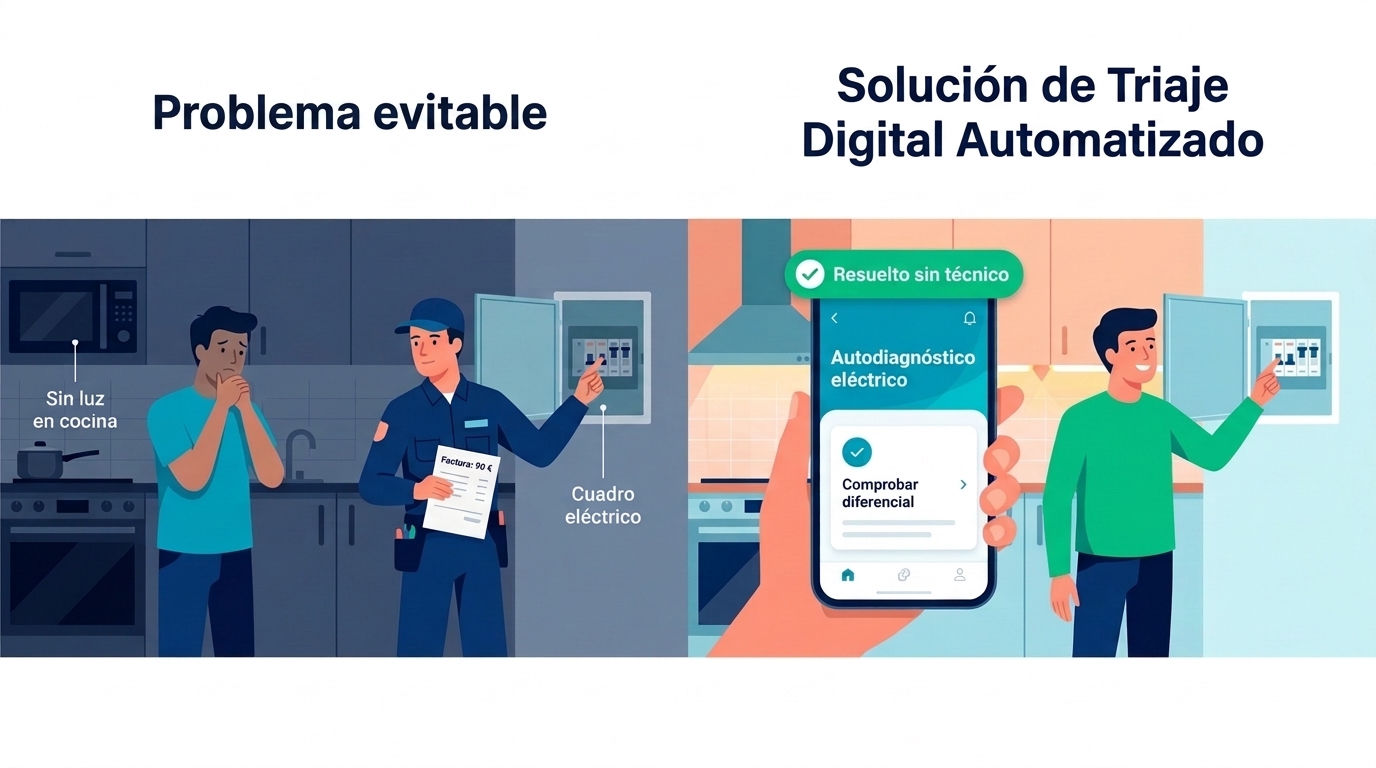
On Thursday at 14:15, Laura, a property manager overseeing 80 rental apartments in Malaga, received an alarmed WhatsApp message from a tenant in apartment 2B: "All the kitchen sockets are completely dead and the microwave just shut off! There must be a major electrical failure in the building. Send an emergency electrician right now!" Fearing a severe wiring fault and spoiled groceries, Laura dispatched an on-call electrician at an emergency rate of €90. The electrician arrived forty minutes later, greeted the tenant, walked straight into the hallway, opened the consumer unit door, and flipped up a single miniature circuit breaker that had tripped when the tenant ran an electric kettle and an air fryer simultaneously on the same socket strip. The physical labor took twelve seconds. When the property owner received the €90 invoice for resetting a domestic switch, they called Laura furious, refusing to pay for a problem that required nothing more than lifting a finger.
The illusion of electrical catastrophe
Electrical issues induce an immediate, visceral panic in tenants that few other domestic faults can match. When an electrical circuit trips, the sudden silence and darkened appliances lead renters to assume the worst: melted wires, fire hazards, or ruined building infrastructure. Because tenants lack technical familiarity with modern distribution boards, they treat a routine safety mechanism as a structural emergency.
Every managing agent knows that receiving a panicked text about lost power often leads to sending an electrician blindly, while forward-thinking agencies use automated triage to guide renters through a 30-second panel self-check before booking an external technician. When an agency relies on unstructured chat, agents naturally absorb the tenant's panic and approve costly dispatches simply to deliver immediate reassurance.
The financial friction of avoidable call-outs
Electricians privately admit that circuit breaker resets are among their most profitable, low-effort jobs. Charging €80 to €120 to visit an apartment, push a plastic switch into the "on" position, and hand over a receipt provides zero diagnostic value to the property. For a property management agency, however, it represents a direct puncture in owner trust.
When the landlord receives the monthly statement, they do not see a prompt response; they see an agency that wasted their rental yield on tenant carelessness. If the agency attempts to pass the €90 invoice onto the tenant, the tenant argues that they "did not know" how the panel worked and assumed it was a real breakdown. The agency ends up trapped in a bitter administrative argument or eating the invoice cost out of their own management fee.
| Blind Dispatch for Power Outages | Guided Electrical Self-Check Intake |
|---|---|
| Tenant texts: "Kitchen electricity is completely dead!" | Bot prompts: "Is the whole flat dark, or just one room?" |
| Electrician dispatched blindly at €90 emergency rate. | Tenant asked to photograph the consumer unit panel. |
| Technician paid to flip one switch in 12 seconds. | Tenant guided to unplug the last appliance and reset switch. |
| Owner furious about paying for tenant carelessness. | 70% of false electrical outages resolved in 2 minutes. |
How leading agencies prevent false electrical call-outs
High-performing rental agencies do not dispatch certified tradespeople for problems that can be identified visually in thirty seconds. They have embedded structured self-help prompts into the initial intake process.
All of us know that spending hours arguing over who pays a call-out fee drains team morale, while agencies using digital intake deploy automated prompts whenever a tenant selects an electrical or appliance power issue. The system immediately asks the tenant to check the consumer unit, look for any switch pointing downwards, and upload a clear photograph of the panel. If a tripped breaker is clearly visible, the bot provides a simple, reassuring prompt: unplug the last appliance that was turned on and push the switch back up. If power returns, the ticket closes immediately. If the switch trips again instantly, a real fault is confirmed and an electrician is dispatched with photographic evidence in hand.
Final reflection
Your property owners' rental income should never be squandered on paying certified electricians to flip domestic plastic switches. Tools like TenantDesk automate maintenance intake via WhatsApp and Telegram, prompting tenants to photograph their electrical panel and perform basic self-checks before any external work order is created. By replacing blind panic with guided visual intake, you protect your owners' margins, eliminate pointless invoices, and keep your agency focused on real property maintenance.