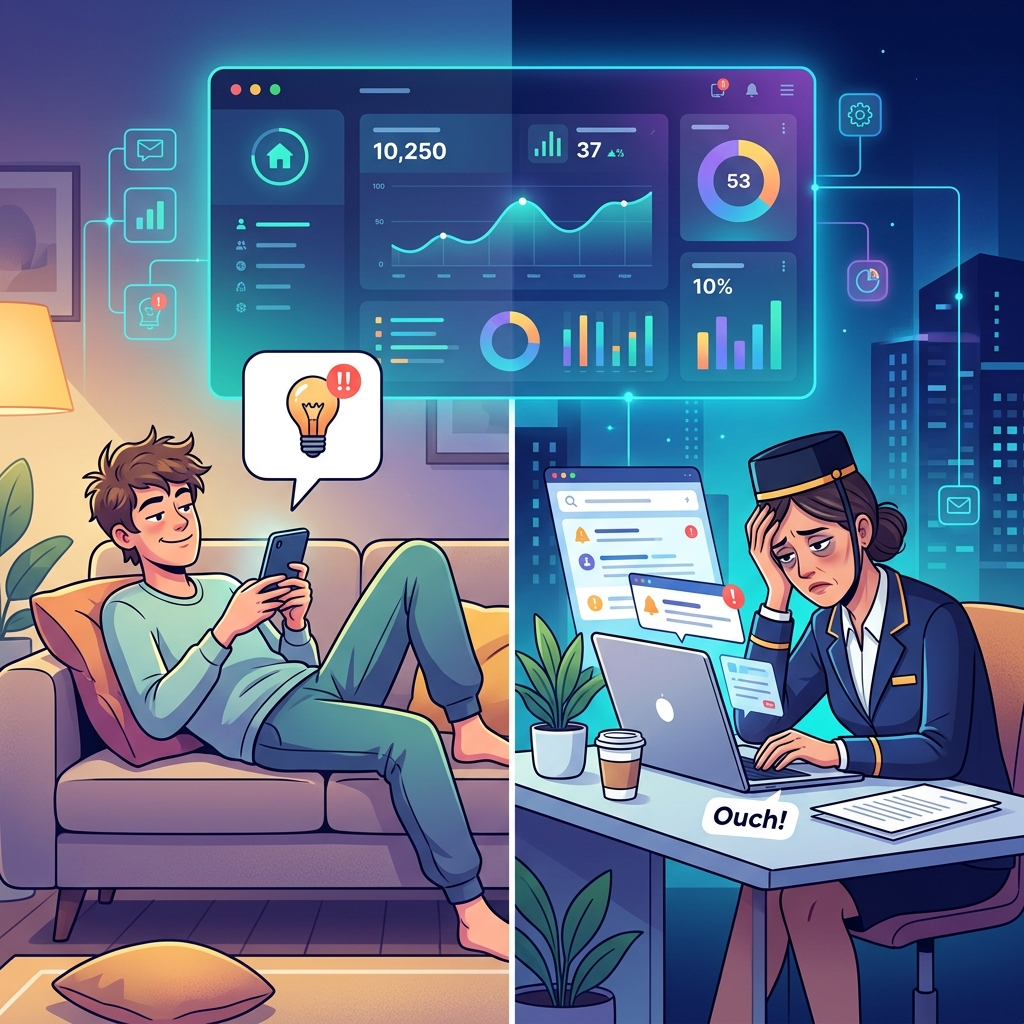
Believing that an "open door" communication policy improves tenant satisfaction is the quickest way to turn your property management agency into a five-star hotel concierge desk without the five-star budget. In an effort to be accessible, managing agents hand out their personal WhatsApp numbers, only to find themselves bombarded on a Sunday afternoon with messages demanding a technician to change a lightbulb or complaints about a Wi-Fi router that just needs restarting.
The zero-friction nightmare
The root cause of these absurd, trivial maintenance requests is not malice on the part of the tenant; it is a complete lack of psychological friction. When the barrier to entry for reporting a problem is simply typing a ten-word text message while lounging on the sofa, tenants will report absolutely anything. They stop acting like independent adults leasing a property and start acting like guests in a luxury resort who expect room service to fix their minor inconveniences.
Our audits with boutique agencies reveal that up to 30% of incoming maintenance messages are fundamentally non-actionable or are tasks that fall strictly under the tenant's legal responsibility. Yet, the agent still has to read, process, and politely decline these requests, burning through hours of cognitive energy that should be spent on acquiring new landlords.
The power of artificial friction
Agencies that have successfully scaled their portfolios without losing their minds have discovered a powerful psychological tool: artificial friction. If you want to stop a tenant from asking you to change a lightbulb, you do not need to argue with them; you simply need to make the process of asking formal enough that they feel foolish doing it.
When an agency implements a digital triage system, the tenant cannot just fire off a casual voice note. They must interact with a bot, select a category, declare the urgency level, and upload a photograph of the issue. When a tenant is forced to stand up, take a photo of a burnt-out lightbulb, and categorise it as an "emergency," the sheer absurdity of their request hits them. In the majority of cases, they abandon the process and change the bulb themselves.
| Casual Messaging (The Concierge Trap) | Digital Triage (The Psychological Barrier) |
|---|---|
| Tenant texts: "The remote control needs batteries." | Tenant is prompted to categorise the appliance and upload a photo. |
| Agent spends 5 minutes politely explaining tenant responsibilities. | Tenant abandons the request midway, realising it is trivial. |
| Zero friction encourages endless micro-complaints. | Formal structure filters out non-maintenance tasks instantly. |
Final reflection
Your property management firm is a business, not a concierge desk. Allowing tenants unfiltered, conversational access to your staff invites a flood of trivial requests that slowly drain your agency's profitability and morale. Affordable tools like TenantDesk automate the initial triage via WhatsApp and Telegram, forcing tenants to pass through a structured data filter before reaching your team. By introducing this necessary psychological boundary, you eliminate the absurd requests at the source, allowing your staff to focus only on the issues that actually require a professional.